The Vector Search Delusion: Why GraphRAG is the New Architecture Moat
Every startup founder who launched a product over the last two years followed the exact same technical playbook: they took their company’s proprietary documents, ran them through an embedding model,...
 NorthPeak Technologies
Every startup founder who launched a product over the last two years followed the exact same technical playbook: they took their company’s proprietary documents, ran them through an embedding model, chucked them into a vector database, and called it a “knowledge engine.”
By mid-2026, that playbook has run directly into a wall.
As enterprise systems transition from basic semantic search to complex, multi-step autonomous operations, flat mathematical similarity scores are no longer enough. We are entering the era of the Knowledge Graph, and the engineering teams that continue to rely solely on isolated text chunks are building on a foundation of structural ignorance.
The “Chunking” Trap of Native Vector RAG
To understand why flat vector search is failing the modern enterprise, we have to look closely at the standard pipeline that dominated the early wave of AI deployment.
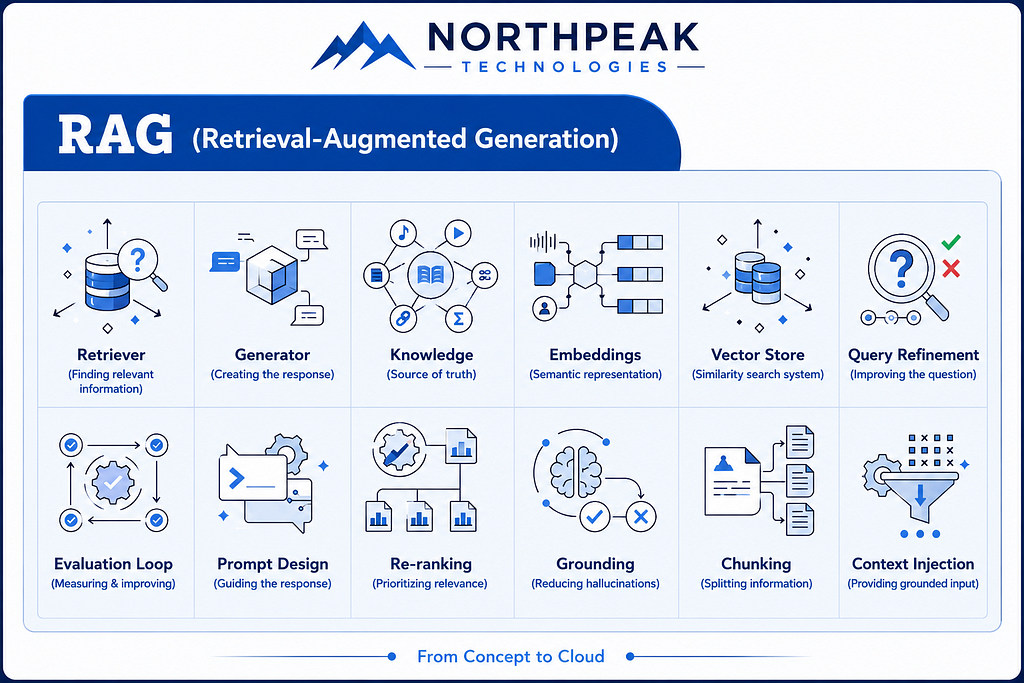
In a conventional Vector RAG (Retrieval-Augmented Generation) framework, the retrieval mechanism relies entirely on mathematical closeness in a high-dimensional space. Your documents are split into static paragraphs (chunks), converted into numerical vectors (embeddings), and stored in an index. When a user asks a question, the system searches for chunks with the highest cosine similarity to the query and passes them directly to the LLM.
This process is incredibly fast and efficient for simple, surface-level inquiries like “What is our policy on parental leave?”
But watch what happens when you ask an enterprise-scale, multi-hop question: “Which software components in our European infrastructure rely on an open-source library that had a security patch last quarter?”
A traditional vector database collapses here. Because the information is shattered into isolated chunks, the model cannot traverse the unstated connections between Software Component, Server Location, Library Dependency, and Patch History. The semantic meaning of individual paragraphs is preserved, but the structural relationship between entities slips through the cracks.
The Shift to Graph-Driven Intelligence
To solve the multi-step reasoning dilemma, the global tech landscape has pivoted toward GraphRAG — an architectural evolution that connects knowledge graphs with large language models to maintain a comprehensive, auditable map of reality.
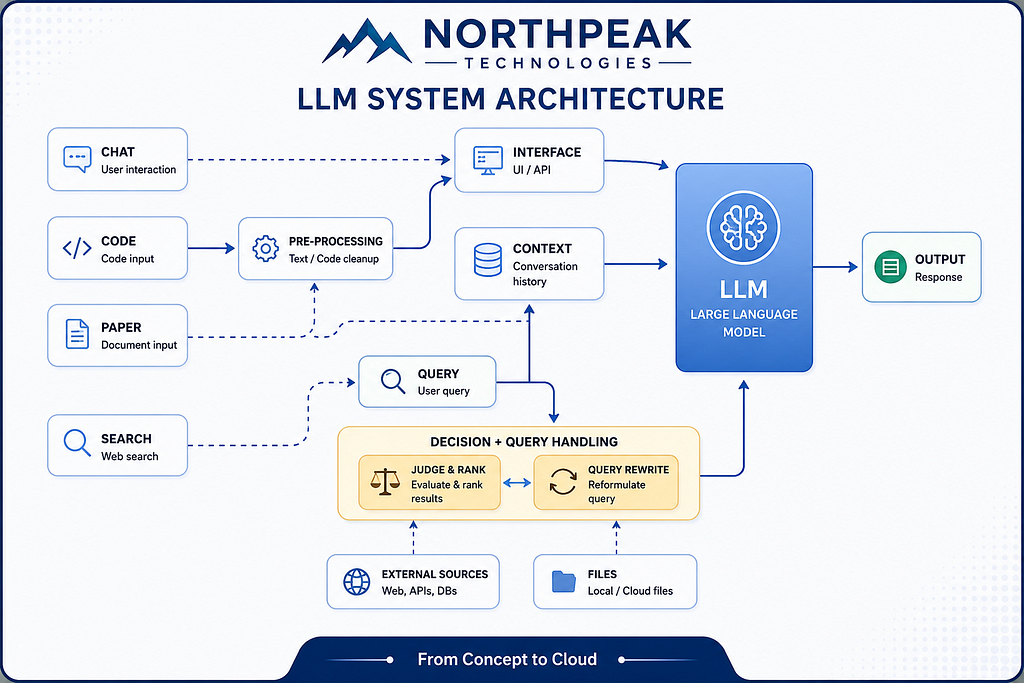
Evaluate the structural flow illustrated in this architectural map. When a question enters a GraphRAG engine, the system doesn’t just run a blind similarity match. It uses a specialized query processor and tool selection framework to traverse a dual-graph database layer:
- The Lexical Graph: Tracks how textual concepts and documents relate to each other semantically across the knowledge base.
- The Domain Graph: Models real-world entities (e.g., specific products, users, architectural components) as nodes and their explicit dependencies as edges (e.g., "DEPENDS_ON", "OWNED_BY", "MUTATED_IN").
Because the relationships are explicitly defined inside the graph database, the retrieval path becomes a clear, traceable sequence of connected connections. The system can traverse multiple hops effortlessly, feeding the LLM an exact, highly structured context packet instead of a random handful of text snippets.
Choosing Your Memory Strategy
While GraphRAG delivers unparalleled reasoning depth and explainability, it introduces higher upfront data modeling constraints compared to simple vector stores. Designing a resilient enterprise architecture means matching the right retrieval strategy to your specific data footprint.
1. Vector RAG
- Best for: Unstructured text like PDFs, Markdown files, and logs.
- What it’s great at: Quick, broad searches based on meaning (semantic matching) without needing exact keywords.
- Cost & Effort: Low. It’s fast to set up and indexes your data almost instantly.
2. GraphRAG
- Best for: Interconnected data where relationships matter (like networks, hierarchies, or complex structures).
- What it’s great at: Connecting the dots across multiple pieces of information (“multi-hop reasoning”) and tracking how things depend on each other.
- Cost & Effort: High. It requires a lot of upfront work to build the data map (entity schema modeling) and takes more computing power.
3. Hybrid Memory
- Best for: A mix of both structured data and unstructured text streams.
- What it’s great at: Giving you the best of both worlds — pulling exact, specific data points while still understanding the big-picture context.
- Cost & Effort: Medium. It requires smart routing layers to send the right query to the right system.
“Similarity is not connection. An LLM might know that two words mean something similar, but it doesn’t know how two business realities affect one another until you map the edge between them.”
Building for Technical Sovereignty
At NorthPeak Technologies, we refuse to build fragile systems that become obsolete with the next model upgrade cycle. When we lead founders from Concept to Cloud, we focus extensively on building resilient, future-proof data pipelines.
To turn your enterprise information into an unshakeable asset, our engineering approach focuses on three core pillars:
- Modular Storage Decoupling: We don’t lock your product into a single, proprietary vector or graph vendor. We engineer clean abstraction layers using type-safe TypeScript environments, ensuring you can swap your underlying database engines as the infrastructure landscape evolves.
- Deterministic Optimization: We treat LLMs as reasoning engines, not storage units. By front-loading fact density and structuring data into clean relational graphs before the model ever sees it, we lower token waste by greater than 40% and completely eliminate hallucinations in high-stakes environments.
- Production-Ready Permanence: Every system we build features immutable audit trails. When an automated agent or a user query surfaces an answer, the explicit graph traversal path is logged cryptographically — providing the total transparency required for enterprise compliance.
The Final Word
The hype of simply “having data” is officially over. The value in the next stage of the tech economy belongs entirely to the companies that understand the structure of their data.
Stop dumping your company’s intellectual property into unorganized, flat vector buckets and hoping the AI will figure it out. Build a cohesive, structured, and production-ready foundation that reflects the true, interconnected nature of your business.
Is your data pipeline built for deep enterprise scale? At NorthPeak Technologies, we help ambitious leaders engineer high-performance, resilient, and cutting-edge cloud infrastructure. Let’s build your foundation.
https://www.northpeaktechnologies.com/
Ready to Build Your Product?
Book a free consultation. We'll review your idea and give you a clear roadmap to launch — in 4 weeks, not 4 months.